The trend of establishing Global In-House Capability Centers (GICCs) closer to home is heating up, with Mexico solidifying its position as the top choice for the Americas, according to Global Research firms such as Everest Group, ISG, and others. These strategic hubs, specializing in areas like IT, finance, and R&D, are attracting companies seeking improved efficiency and control. Gartner in 2017, selected Mexico as the best nearshore location for North America, but what new factors are contributing to this current boom
Navigating Uncertainty
During the Pandemic, Companies were pressured to be more cost-efficient and do more with less, so they tested new regions, technologies, and workforce setups, and in turn, built resilient organizations. One of the outcomes was that having geographical operative hubs minimized the risk of centralization and could benefit from more than one talent pool. Setting up engineering teams in Mexico, in comparison to the USA, provides over 60% cost savings.
Location, Location, Location
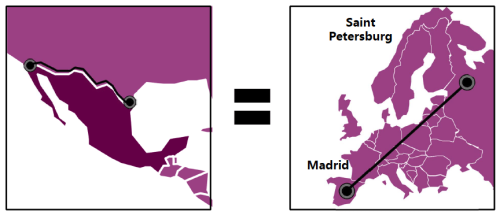
Mexico shares almost 2,000 miles of land border with the US, so travel times from Mexico are similar to those of other US Cities. Today, there is a Nearshoring phenomenon due to the revamped USMCA Trade Agreement and the USA-China Trade Wars. For this reason, Mexico has been the top trading Partner of the USA and recently, for the first time in 20 years, the U.S. buys more from Mexico than China. New Data showed that Mexico outpaced China to become America’s top source of official imports.
Analysts recommend in different order India, China, Mexico, the Philippines, and Poland as the best places to build world-class GCCs. But if the question is of where the best place for a nearshore center for North America is, the consensus #1 option is Mexico.
SMEs have joined the trend
The cost and risk of opening foreign operations is substantially lower than it used to be. Strategically located countries have attractive soft-landing options that foreign companies can benefit from. So there is no need to hire one of the top 4 consulting firms or commit early to a large number of hires with a B.O.T. contract. Small and Medium-sized Enterprises (SMEs) can hire specialized agencies to help them start conservatively, validate assumptions, and then scale in size and functionality.
Mexico has options by industry, like the Shelter model for the Manufacturing Industry, or the Subsidiary-as-a-Service, for Tech companies. Using a model that enables private investors to lower substantially the cost of the foreign operation by using the economies of scale of the vendor and minimizing risk exposure, while still owning the operation, has made this option a great fit for their smaller Portfolio Companies.
The Forbes “Global Inhouse on the Rise” article mentions that “If a company wanted to operate its own offshore captive 15-20 years ago, it required 1,000 – 2,000 people. The economics are now down at 30 – 40 people”. While large corporations often struggle with bureaucratic inertia, SMEs thrive on agility and adaptability. This requires staying nimble and flexible, so SMEs are running multi-function regional offices of 20 to 60 people, with the option to scale. Because of this size and structure, ISG calls them Micro Capability Centers. “These micro capability centers enable critical elements of innovation: agility, scalability, cost-efficiency and versatility”and add much-needed business flexibility to rapidly pivot and adjust.
Talent Size and Quality
Mexico has the best of two worlds when it comes to talent, its world-class academic institutions, and the size of its population. At the end of the day, it is talent that the delivery center needs, not industrial machinery or the country’s natural resources, so the size of the population matters greatly. Looking for specialized candidates from a pool of 130 million people will look different than selecting from a country with 10 million.
Mexico houses over 1,250 higher education institutions, that churn out 110,000 STEM graduates a year, including renowned technology schools like the Technologico de Monterrey, Universidad Nacional Autonoma de Mexico, and University of Guadalajara. Out of the 400 top universities in the LATAM region, Mexico has 63 of them, making it a strong education hub.
This is why Tech companies like Ascendion, are opening 1,500 people centers just for AI Engineering. The foreign influx of companies and local companies continues to create top talent. For example, in Mexico, there are approximately 332 active local AI companies, 55% founded in the last five years.
In Conclusion
Today, companies are adding core and critical capabilities in their cost-efficient regional centers, so these strategic skills cannot be outsourced and risk that company knowledge leaves.
Large corporations have taken cues from SMEs and are using soft-landing strategies to significantly reduce local expenses and risks. However, labeling them merely as Global Capabilities centers would undermine their multifaceted functions. These highly efficient centers have evolved to support multiple roles, including Global IT Services, a Sales Office, regional Project Management Offices (PMOs), and more.
Yes, Mexico continues to be the best option in the region for North America because of the overpowering combination of its talent size and proximity, but it doesn´t mean that it should replace India. Each country offers distinct advantages; choosing the right combination depends on your specific needs and creating a decentralized supply chain. Close to 60% of Everscale customers, have offshore centers in India, but Mexico adds talent in North America for customer-facing roles, plus the same team can support the Latin America continent. As ISG pointed out, these foreign multi-function centers are scalable, with cost-efficient skilled teams, that provide versatility in their organization structure. This approach is available for Large and Small companies, but SMEs that are always looking to do more with less might be starting to lead this trend.