NEARSHORE · MEXICO MARKET ENTRY
Soft Landing Options in Mexico
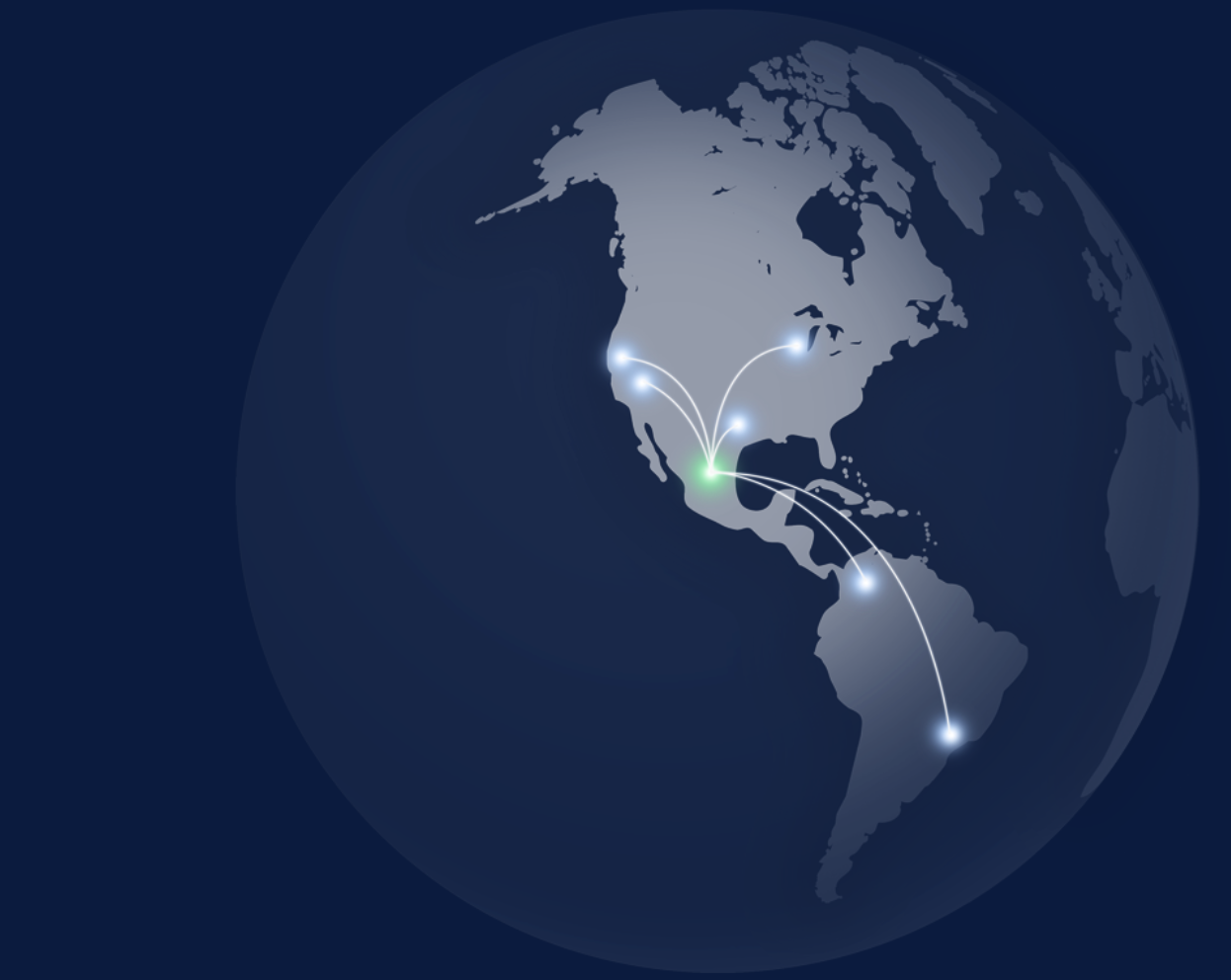
Mexico has built one of the most mature soft-landing portfolios in the Americas — over 30 years of foreign investment, a 1,954-mile border with the USA, and proven local frameworks that reduce the risk and cost of opening a new operation. Tech and professional services companies have multiple proven paths into the market.
Shelter Model · Subsidiary-as-a-Service · BOT Model · Temporary Team & EoR
FIND THE BEST FIT FOR YOUR SCENARIO
Mexico is the destination, the model is the key decision. Tell us your team size, timeline, and priorities — we'll help you identify the right framework before you commit.
Book a Consultation →No commitment required
WHY SOFT LANDING OPTIONS EXIST
What is a soft landing, and why does Mexico have so many?
Expanding into a foreign country brings a unique set of challenges — unfamiliar labor law, tax and compliance requirements, vendors, and no track record on the ground. Countries with strategic geographic locations tend to attract the most foreign investment, and as that investment matures, they develop soft landing options: established local infrastructure and operating support that reduce the risk and cost of opening and running a new operation there.
This is why Mexico has attracted foreign investment for more than 30 years — a 1,954-mile border with the USA, paired with a robust and mature soft-landing portfolio, helps foreign companies minimize risk and reduce cost as they establish their own operations in the country.
Tech and professional services companies extend their operations into Mexico through different Soft-Landing options, as each model creates a different balance of speed, flexibility, operational control, and long-term commitment.
CHOOSING BY OPERATIONAL INTENT
Start with what your operation needs now.
Foreign companies use soft landing services in Mexico to reduce entry risk, shorten the local learning curve, and avoid building every operational capability before the business case is validated. The right option depends less on your company's size than on what the Mexico operation must accomplish first.
VALIDATE
Temporary Teams
A single-vendor alternative to a basic EOR for companies that need a small team, a project launch, or a controlled pilot — recruiting, local operations, payroll, and compliance coordinated through one partner instead of three or four.
BUILD WITH FLEXIBILITY
SUBaaS
Subsidiary-as-a-Service gives professional services and technology companies the advantages of a local operation without building every capability from zero. Start at the size you need, use shared infrastructure, and scale as the case is proven.
BUILD AT LARGE SCALE
BOT
Build-Operate-Transfer is designed for a large, defined operation. Everscale helps design, build, and stabilize the local platform before ownership is transferred under an agreed plan — the tech-sector counterpart to the manufacturing shelter model.
Leasing a team is not the same as building one
What Soft Landing is not
A soft landing gives a company the infrastructure to build and run its own Mexico operation — with its own people, its own brand, and its own culture on the ground.
Staff augmentation vendors like BairesDev or Howdy offer something different: access to engineers who are already employees of another company. Those teams remain part of the vendor's organization, carry the vendor's culture and employment structure, and are not expected to join or identify with the client company. When the contract ends, they leave. Nothing was built.
The distinction matters because companies sometimes look for "nearshore talent" without separating "build your own team in Mexico" from "rent someone else's." A leased team can fill a short-term need, but it does not create a local operation, reduce your long-term talent cost, or give you operational control in the region.
COMMON QUESTION
Is an EOR platform a soft landing option?
By itself, no. An EOR handles employment and payroll for individual hires — one building block of the many a real operation requires. You still need recruiting, workspace, procurement, compliance coordination, finance support, and local market expertise.
With just an EoR portal, the company isn't actually landing in Mexico.
Choosing the right operating model
Mexico (Nearshore) vs India (Offshore)
Nearshore and offshore are not interchangeable. Each serves a different operational scale and supports a different strategy.
Nearshore: Proximity
India: Scale + Async workflows
Total overlap with US business hours — real-time collaboration, daily standups, and live pairing.
Time-zone gaps typically require async workflows or extended-hours coverage.
Travel time similar to domestic flights, for leadership visits, onboarding, and in-person team building.
A larger, more mature offshore and GCC talent pool that supports operations at greater scale.
SUBaaS and GCC-as-a-Service enable smaller & flexible operations, to large scale growth.
Best suited to follow-the-sun coverage and cost optimization of large scale operations.
Business critical talent, and customer-facing teams that need to work in the North America region.
Teams that do not require daily, real-time overlap with US stakeholders.
Use each region for what it does best
Many companies keep an India engineering hub for scale and add a smaller Mexico team for US-time-zone collaboration — a complementary footprint, not an either/or decision.
Compare Mexico soft landing options
Each model creates a different balance of speed, flexibility, operational control, and long-term commitment.
| Decision factor | Temporary Teams | SUBaaS | BOT |
|---|---|---|---|
| Best used when | Testing the region, running a project, or forming a small team | Building a scalable, branded Mexico operation without a stand-alone entity on day one | Launching a large, predefined operation intended for eventual transfer |
| Relative launch speed | Fastest — uses an existing local platform | Fast — capabilities are activated as needed | Longer runway — entity and operation are built from scratch |
| Flexibility | High for project and pilot needs | High — scale people, space, and capabilities as the operation evolves | Lower — scope and transfer plan are defined up front |
| Local operating support | Recruiting, payroll, compliance, workspace, and coordination | End-to-end shared infrastructure across people, finance, facilities, procurement, and advisory | Partner-led build and operation through stabilization |
| Long-term path | Conclude, extend, or evolve into SUBaaS | Remain on the platform or transfer once scale and timing justify it | Transfer the stabilized operation under the agreed plan |
Looking for the full cost breakdown by model? See the detailed Mexico expansion cost comparison →
Local capabilities determine whether the landing works.
A basic EOR can be useful for a temporary remote hire. A team of 5, 20, 80+ people, requires more.
WHAT AN EOR PORTAL COVERS
Legal employment & Payroll processing
WHAT A SOFT LANDING OPERATION ADDS
Specialized Recruiting
Facilities management
Procurement and local logistics
Market and regulatory guidance
Local People Ops assistance
One point of accountability instead of many vendors
Multi-city locations
GTM Research & Data
Everscale brings those capabilities together for enterprise software, technology, and professional services companies — so leadership can focus on the operation while the local platform, with teams already on the ground in five Mexican cities, handles the environment around it.
FOR PRIVATE EQUITY
Scaling across multiple portfolio companies
One operating partner can stand up teams across several portfolio companies at once, each on its own timeline, without forcing every PortCo through a separate vendor search. See how the model works and the numbers behind it.
Visit the Private Equity Hub →FOR PE OPERATING PARTNERS & CEOS
What PE firms look for in a soft-landing partner
Everscale's CEO walks through what operating partners actually evaluate when comparing soft landing models in Mexico — and where teams get the tradeoffs wrong.
Watch the interview →Soft landing Mexico FAQs
A soft landing is a structured way to enter Mexico using established local infrastructure, expertise, and operating support. It helps a foreign company reduce setup friction and risk while it validates, launches, or scales its own operation.
An EOR primarily provides a legal employment and payroll mechanism for individual hires. SUBaaS is an operating model for building a team or full local capability — recruiting, people operations, facilities, finance support, procurement, compliance coordination, and local expertise, all through one partner. Companies keeping compliance in-house alongside an EOR still have to own recruiting, workspace, and vendor management themselves; SUBaaS folds all of that into the same operating platform.
They share the soft-landing principle of using an experienced local platform, but they serve different operations. The shelter model is built for manufacturing. SUBaaS and GCC-as-a-Service apply the same soft-landing principles to technology, professional services, and other knowledge-work operations.
BOT fits a large, defined operation that warrants building a dedicated entity and infrastructure from scratch, but where the company wants an experienced local partner to operate and stabilize it before transfer.
Yes. A company may validate with a Temporary Team, scale through SUBaaS, and later transfer to a stand-alone structure when the operation is stable and the economics support that choice.
Mexico offers near-total overlap with US business hours and shorter travel time for hands-on leadership; India offers a larger, more mature offshore talent pool at greater scale. Most companies use both rather than replacing one with the other — extending an India hub for scale while adding a Mexico team specifically for real-time US collaboration.
Yes — a single operating platform can stand up dedicated teams across several portfolio companies or business units simultaneously, each on its own timeline and scale.
Weigh five things: physical presence (an office and operating team in Mexico, not just a registered agent); multiple cities (if they only have a presence in one city, they may be biased when helping you select the most appropriate location); single-vendor scope (recruiting, payroll, compliance, procurement, workspace, and market research under one contract instead of across multiple vendors); track record (years operating in-market, as economies of scale take years to build); and references from companies in your industry and at a similar stage.