Soft Landing Options in Mexico: How they work and Lessons Learned
Adding cost-efficient foreign operations for tech companies has become a staple in the industry. As a result, companies of all sizes are expanding more than ever to Mexico, employing various strategies based on the scale of their operations and goals.
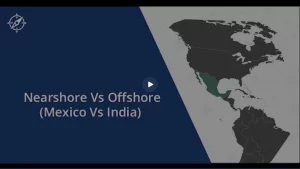
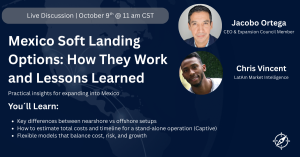
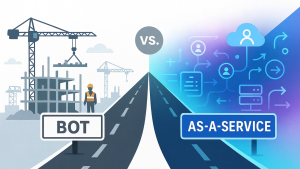
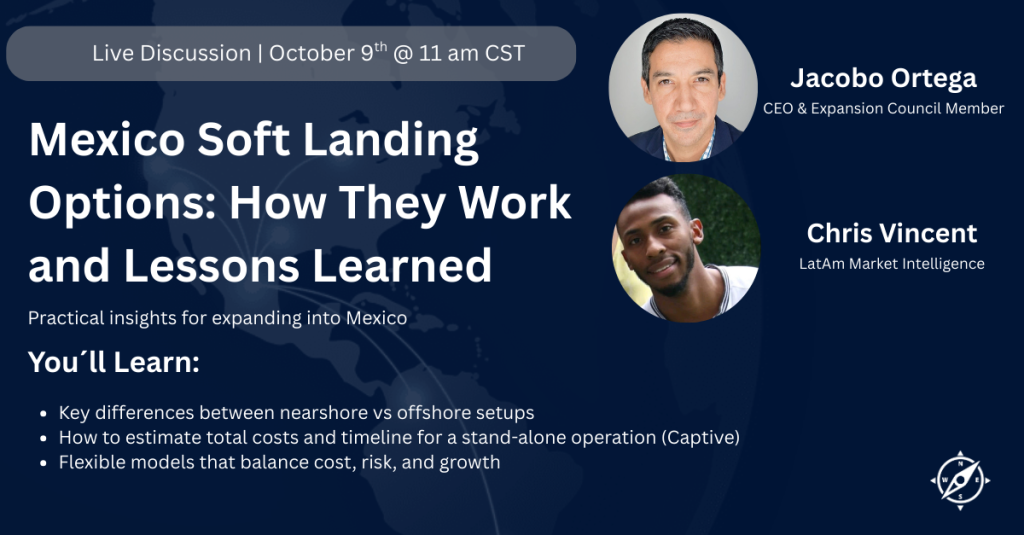
Soft-landing frameworks offer foreign companies a way to mitigate the risks of entering an unfamiliar market. While some prioritize cost reduction, others focus on flexibility, allowing companies to pilot their operations before committing fully. This session will explore how soft-landing options work in Mexico versus India. The evolution of the Build-Operate, and Transfer (BOT) to as-a-Service Model, and what other industries can learn from Mexico’s Shelter Model for foreign expansion. Participants will gain a clear understanding of the Do-It-Yourself approach, its challenges, and strategies to avoid common pitfalls. Finally, we’ll examine how these frameworks navigate regulatory landscapes and align with Mexico’s business culture.
Agenda
- Expansion Strategies: Nearshore vs Offshore Operations
- Leveraging the Pay per use Model, and Soft Landing options
- Mexico Expansion: Key Activities, Phases, & Timeline
- Case Studies: Financial Scenarios
- Lessons Learned: Cost Savings, Risk Mitigation, Time to Value
Foreign Expansion Strategy:
- Where we build it (Offshore vs. Nearshore)
- What we build (GCC, CoE, GBS, Delivery Center, Regional Office)
- How we expand (DIY, SUBaaS, BOT, Shelter, FastTrack)
Whatever the combination of these 3, it will serve a different strategic purpose.