PostCovid Organizational Resilience: Accesing New Revenue and building a more Flexible Operation

Industries stopped and the way of doing business changed overnight, like remote work. Companies have handled the immediate crisis and are starting to put in place sales strategies to bounce back faster. Also, operations models need to handle better major disruptions.

In the past IT Solution Providers, such as SAP Partners, have used certain practices that used together could enable a more resilient organization. Revenue diversification, flexible expenses over fixed costs, and leveraging advantages of the New Normal should be part of the ingredients.In our next Webinar, we will share options that could be used to support these strategies.AGENDA
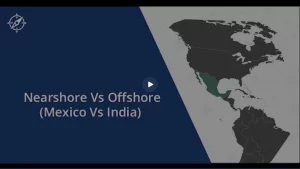
  • Shortcuts for accessing customers and business development in other countries without establishing a local entity. How to validate customer whitespace faster. Options used for LATAM, Europe and Asia.New capabilities that can be added today without acquiring another company or developing a new solution from zero, while avoiding the overhead cost of another partner.Risk Management by establishing operations that can scale up & down. Besides Cloud Platforms, what other economies of scale can be leveraged to minimizing fixed assets & costs.Best practices when implementing a regionalized Supply Chain, that uses Offshore, Nearshore and Onshore Delivery models. How to benefit from Regional Trade Agreements, like USMCA.How some Tech Companies are leveraging Remote Work, from PreSales to Delivery.
  • Share:

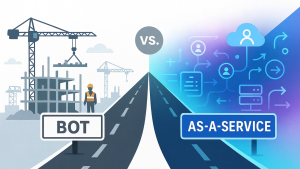
    Comparing the BOT Model vs the As-a-Service Framework cove image

    Comparing the BOT Model vs the As-a-Service Framework

    For years, tech companies expanding offshore that were looking for the advisory of a local expert, favored the Build‑Operate‑Transfer (BOT) model to launch Global Capability Centers (GCCs) or Shared Services Centers. The specialized vendor built the operation from scratch—dedicated infrastructure, a new legal entity, admin staff hiring, policies—then stabilized it and transferred it to the client after a set term. Because the vendor assumes execution risk, BOT pricing typically includes a margin on top of the total operation (a % uplift). It’s more expensive than the Do-It-Yourself approach, but the premium is often justified: it reduces unknown‑country risk and limits budget overruns with a turnkey, governed path to transfer.

    Read more »

    Financial Analysis of Starting Operations in Mexico: Cost, Risk, and Time-to-Value

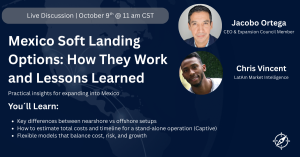
    For North American B2B tech companies, expanding into Mexico offers both cost savings and access to top talent—but the approach matters. A DIY setup can be slow, risky, and expensive, while the Subsidiary-as-a-Service (SUBaaS) model delivers speed, compliance, and significant savings. By paying only for what they use, companies can reduce operational costs by up to 70%, avoid legal and compliance pitfalls, and launch in weeks instead of months. SUBaaS makes nearshore operations scalable, capex-friendly, and investor-approved—helping businesses stay lean and competitive in a volatile global economy.

    Read more »